Buy agrophysical.eu ?
We are moving the project
agrophysical.eu .
Are you interested in purchasing the domain
agrophysical.eu ?
domain@kv-gmbh.de · 0541-91531010
Buy agrophysical.eu ?
Can you explain virtue ethics, duty ethics, and goods ethics?
Virtue ethics focuses on the character of the individual and emphasizes the development of virtuous traits such as honesty, courage, and compassion. It is concerned with cultivating moral excellence and living a good life. Duty ethics, also known as deontological ethics, is based on the idea that certain actions are inherently right or wrong, regardless of their consequences. It emphasizes the importance of following moral rules and fulfilling one's duties and obligations. Goods ethics, or consequentialism, evaluates the morality of an action based on its outcomes or consequences. It focuses on maximizing the overall good or happiness and considers the potential impact of an action on others. **
Is Buddhist ethics comparable to Christian ethics?
Buddhist ethics and Christian ethics share some similarities, such as the emphasis on compassion, love, and non-violence. Both traditions also promote the idea of treating others with kindness and respect. However, there are also significant differences between the two, such as the concept of sin and salvation in Christianity, which is not present in Buddhism. Additionally, the role of divine authority and the concept of God differs between the two traditions. Overall, while there are some common ethical principles, the underlying beliefs and foundations of Buddhist and Christian ethics are distinct. **

Similar search terms for Ethics
Top-Angebote
Products related to Ethics:
-
Inspired Finds Sakura Hand Wax Mask For Deep Moisture, Smoother Texture, And Softer Hands 1.76oz Sakura Hand Wax Mask For Deep Moisture, Smoother Texture, And Softer Hands 1.76ozDry, rough hands need more than a basic lotion. This sakura hand wax is designed to help soften texture, improve dryness, and leave hands feeling smoother and more cared for after each use. Positioned as a moisturizing hand mask, it brings an easy...34,99 $*Shipping: 0,00 $Secure redirect to the provider
-
Inspired Finds Green Tea Hand Mask For Deep Moisture, Smoother Texture, And Softer Looking Hands 1.76oz 1pcDry, rough hands can make skin look tired long before the rest of your routine does. This green tea hand mask is made to give your hands a more pampered, refreshed feel with a treatment that helps soften texture, improve the look of dryness, and...40,99 $*Shipping: 0,00 $Secure redirect to the provider
-
Uplift Picks 3D Skin Analysis Machine Portable Facial Scanner For Moisture Oil And Texture Testing white (13.3 Inch)See your skin more clearly and make every skincare choice feel more intentional. This 3D skin analysis machine helps check moisture, oil balance, and texture so you can better understand what your skin needs. Designed for home routines, salons,...3515,00 $*Shipping: 0,00 $Secure redirect to the provider
-
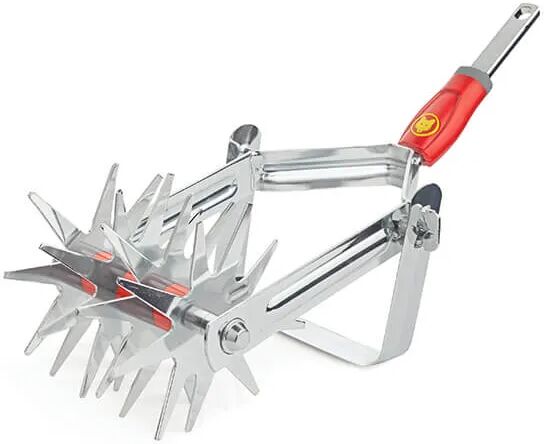
Wolf Garten Multi-Change Soil MillerThe Wolf Garten Multi-Change Soil Miller is suitable for breaking up soil into fine tilth, removing weeds and preparing your earth before planting and sowing seeds. This essential tool also helps to mix peat, manure or fertiliser into the soil with little effort. The rear blade provides stability whilst you work, making it ideal for larger areas. Designed to be used with your choice of handle (sold separately) with a simple push of the button and a gentle click. Made in Germany and complete with a 35 year manufacturers guarantee. Dimensions: 25(H) x 15(W) x 12(L)cm.52,19 £*Shipping: 0,00 £Secure redirect to the provider


-
Is Nicomachean Ethics the same as Virtue Ethics?
Nicomachean Ethics is a specific work by Aristotle that is considered one of the foundational texts in virtue ethics. While Nicomachean Ethics is a key text within the broader framework of virtue ethics, virtue ethics itself is a broader ethical theory that encompasses various other works and perspectives beyond just Aristotle's. So, while Nicomachean Ethics is a significant part of virtue ethics, they are not exactly the same thing. **
-
Does Kant's deontological ethics contradict Aristotle's eudaemonistic ethics?
Kant's deontological ethics and Aristotle's eudaemonistic ethics have some fundamental differences, but they do not necessarily contradict each other. Kant's ethics focus on duty and the intention behind actions, while Aristotle's ethics emphasize achieving eudaimonia, or human flourishing, through virtuous actions. While Kant's emphasis on duty can sometimes conflict with Aristotle's emphasis on virtue, both ethical theories ultimately aim to guide individuals towards leading a good and moral life. Therefore, while they may approach ethics from different perspectives, they can be seen as complementary rather than contradictory. **
-
Is responsibility ethics the same as future ethics?
Responsibility ethics and future ethics are related but not the same. Responsibility ethics focuses on the moral obligations and duties that individuals and organizations have in the present moment, while future ethics considers the ethical implications of our actions on future generations and the long-term consequences of our choices. While responsibility ethics emphasizes the immediate impact of our actions, future ethics considers the broader and long-term effects of our decisions on the well-being of future generations and the sustainability of the planet. Both are important aspects of ethical decision-making, but they address different time frames and perspectives. **
-
Does ethics still exist nowadays? Is ethics a problem?
Ethics still exist nowadays as a set of moral principles that guide human behavior and decision-making. However, there are instances where ethical considerations are overlooked or compromised in favor of personal gain or convenience, making ethics a problem in society. It is important for individuals and organizations to prioritize ethical behavior to maintain trust, integrity, and social responsibility. Efforts to promote ethical conduct through education, awareness, and accountability can help address ethical challenges in today's world. **


What is ethics?
Ethics is a branch of philosophy that deals with moral principles and values that govern individual behavior and decision-making. It involves distinguishing between right and wrong actions, as well as understanding the consequences of those actions on individuals and society as a whole. Ethics provides a framework for individuals to make ethical choices and behave in a morally responsible manner. It also helps in creating a sense of accountability and integrity in personal and professional relationships. **
What are the differences between deontological ethics and utilitarian ethics?
Deontological ethics, also known as duty-based ethics, focuses on the inherent rightness or wrongness of actions themselves, regardless of their consequences. It emphasizes following moral rules and duties, such as telling the truth or keeping promises, based on principles like the categorical imperative. On the other hand, utilitarian ethics, also known as consequentialist ethics, prioritizes the outcomes or consequences of actions. It aims to maximize overall happiness or well-being for the greatest number of people, often through the calculation of benefits and harms. While deontological ethics emphasizes duty and rules, utilitarian ethics prioritizes the greatest good for the greatest number. **
Top-Angebote
Products related to Ethics:
-
Matrix Total Results InstaCure Anti-Breakage Porosity Filler Spray forStock up and save on nourished locks with this double pack of Total Results InstaCure Anti-Breakage Porosity Filler Spray for Damaged Hair in 190ml! Perfect for dry, brittle and damaged hair, this anti-breakage spray has been Infused with B5 and Liquid Protein to repair and nourish hair in need of TLC. The light-weight formula smooths cuticle damage, controls static and frizz, conditions over-porous hair, protects hair from heat styling, and works on sensitive and vulnerable hair to balance pH. Anti-Breakage System of shampoo, conditioner and spray fills porosity, creating an even and balanced surface. Key Benefits: - Controls static and frizz - Conditions over-porous hair - Protects hair from heat styling, - Works on sensitive and vulnerable hair to balance pH - Spray fills porosity, creating an even and balanced surface Ingredients: aqua / water, sodium laureth sulfate, coco-betaine, glycerin, glycol distearate, sodium chloride, propylene glycol, polyquaternium-10, parfum / fragrance, sodium benzoate, sodium hydroxide, citric acid, ppg-5-ceteth-20, carbomer, salicylic acid, hexyl cinnamal, linalool, limonene, hydrolyzed wheat protein, geraniol, hydrolyzed corn protein, hydrolyzed soy protein, citronellol, phenoxyethanol30,72 £*Shipping: 0,00 £Secure redirect to the provider
-
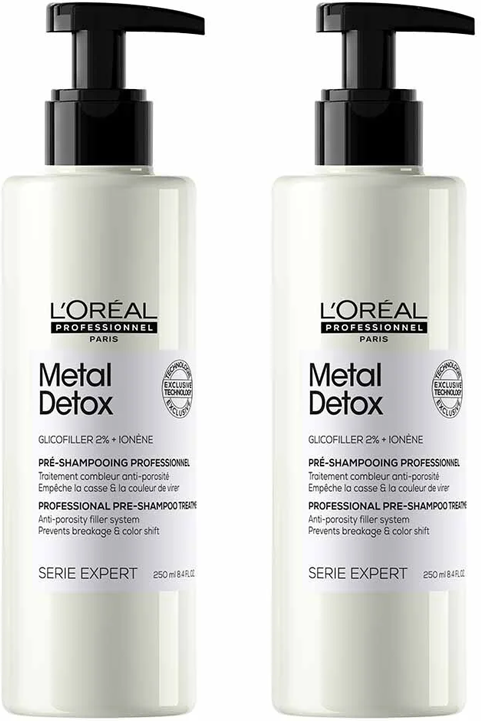
L'Oreal Professionnel L’Oréal Professionnel Metal Detox Anti-Porosity Filler Pre-ShampooMetal in water penetrating inside your hair is one of the major causes of hair breakage. But did you know that porous hair has an even higher risk of breaking as it absorbs up to 2x more water with metal? Through daily aggressions like chemical processing, heat styling or UV, micro-breaks multiply on the hair surface & cavities occur in the cortex, causing hair to get porous & absorb excess water with metal. Micro-breaks are a disruption of the protective cuticle layer which are the first signs of damage. This leads to higher risks of breakage. This new pre-shampoo treatment is part of the Metal Detox range, a full anti-metal protocol to help prevent hair breakage & colour fade. Lightweight, concentrated gel texture that instantly & deeply penetrates the fibre. Instant action, no pausing time needed. Boasting an addictive fragrance with a unique tech signature, thanks to a memorable citrus top associated with distinctive musky woods. Suitable for all hair textures, colour-treated, damaged, sensitized, bleached & natural hair. Ingredients: 1248604 E - INGREDIENTS: AQUA / WATER / EAU • LAURETH-5 CARBOXYLIC ACID • AMINOPROPYL TRIETHOXYSILANE • COCAMIDOPROPYL BETAINE • SODIUM CHLORIDE • PEG-150 DISTEARATE • PHENOXYETHANOL • PEG-40 HYDROGENATED CASTOR OIL • POLYQUATERNIUM-67 • LACTIC ACID • LAURETH-4 • SODIUM HYDROXIDE • CAPRYLYL GLYCOL • LIMONENE • HEXYL CINNAMAL • LINALOOL • CITRAL • GERANIOL • POLYQUATERNIUM-7 • SODIUM BENZOATE • PARFUM / FRAGRANCE (F.I.L. N70031596/1)49,60 £*Shipping: 0,00 £Secure redirect to the provider
-
Inspired Finds Sakura Hand Wax Mask For Deep Moisture, Smoother Texture, And Softer Hands 1.76oz Sakura Hand Wax Mask For Deep Moisture, Smoother Texture, And Softer Hands 1.76ozDry, rough hands need more than a basic lotion. This sakura hand wax is designed to help soften texture, improve dryness, and leave hands feeling smoother and more cared for after each use. Positioned as a moisturizing hand mask, it brings an easy...34,99 $*Shipping: 0,00 $Secure redirect to the provider
-
Inspired Finds Green Tea Hand Mask For Deep Moisture, Smoother Texture, And Softer Looking Hands 1.76oz 1pcDry, rough hands can make skin look tired long before the rest of your routine does. This green tea hand mask is made to give your hands a more pampered, refreshed feel with a treatment that helps soften texture, improve the look of dryness, and...40,99 $*Shipping: 0,00 $Secure redirect to the provider
-
Can you explain virtue ethics, duty ethics, and goods ethics?
Virtue ethics focuses on the character of the individual and emphasizes the development of virtuous traits such as honesty, courage, and compassion. It is concerned with cultivating moral excellence and living a good life. Duty ethics, also known as deontological ethics, is based on the idea that certain actions are inherently right or wrong, regardless of their consequences. It emphasizes the importance of following moral rules and fulfilling one's duties and obligations. Goods ethics, or consequentialism, evaluates the morality of an action based on its outcomes or consequences. It focuses on maximizing the overall good or happiness and considers the potential impact of an action on others. **
-
Is Buddhist ethics comparable to Christian ethics?
Buddhist ethics and Christian ethics share some similarities, such as the emphasis on compassion, love, and non-violence. Both traditions also promote the idea of treating others with kindness and respect. However, there are also significant differences between the two, such as the concept of sin and salvation in Christianity, which is not present in Buddhism. Additionally, the role of divine authority and the concept of God differs between the two traditions. Overall, while there are some common ethical principles, the underlying beliefs and foundations of Buddhist and Christian ethics are distinct. **
-
Is Nicomachean Ethics the same as Virtue Ethics?
Nicomachean Ethics is a specific work by Aristotle that is considered one of the foundational texts in virtue ethics. While Nicomachean Ethics is a key text within the broader framework of virtue ethics, virtue ethics itself is a broader ethical theory that encompasses various other works and perspectives beyond just Aristotle's. So, while Nicomachean Ethics is a significant part of virtue ethics, they are not exactly the same thing. **
-
Does Kant's deontological ethics contradict Aristotle's eudaemonistic ethics?
Kant's deontological ethics and Aristotle's eudaemonistic ethics have some fundamental differences, but they do not necessarily contradict each other. Kant's ethics focus on duty and the intention behind actions, while Aristotle's ethics emphasize achieving eudaimonia, or human flourishing, through virtuous actions. While Kant's emphasis on duty can sometimes conflict with Aristotle's emphasis on virtue, both ethical theories ultimately aim to guide individuals towards leading a good and moral life. Therefore, while they may approach ethics from different perspectives, they can be seen as complementary rather than contradictory. **
Similar search terms for Ethics
-
Uplift Picks 3D Skin Analysis Machine Portable Facial Scanner For Moisture Oil And Texture Testing white (13.3 Inch)See your skin more clearly and make every skincare choice feel more intentional. This 3D skin analysis machine helps check moisture, oil balance, and texture so you can better understand what your skin needs. Designed for home routines, salons,...3515,00 $*Shipping: 0,00 $Secure redirect to the provider
-
Wolf Garten Multi-Change Soil MillerThe Wolf Garten Multi-Change Soil Miller is suitable for breaking up soil into fine tilth, removing weeds and preparing your earth before planting and sowing seeds. This essential tool also helps to mix peat, manure or fertiliser into the soil with little effort. The rear blade provides stability whilst you work, making it ideal for larger areas. Designed to be used with your choice of handle (sold separately) with a simple push of the button and a gentle click. Made in Germany and complete with a 35 year manufacturers guarantee. Dimensions: 25(H) x 15(W) x 12(L)cm.52,19 £*Shipping: 0,00 £Secure redirect to the provider
-
All Categories Goods Digital Wood Moisture Meter Firewood & Woodworking Moisture Reader Digital Wood Moisture Meter Firewood & Woodworking Moisture ReaderStop guessing and start knowing the true moisture level of your lumber or firewood with the 7in1 Digital Wood Moisture Meter. Designed for woodworkers, hobbyists, and homeowners alike, this tool gives clear, fast, and dependable readings so you can...89,97 $*Shipping: 0,00 $Secure redirect to the provider
-
Inspired Finds Green Tea Hand Mask For Deep Moisture, Smoother Texture, And Softer Looking Hands 1.76oz 2pcsDry, rough hands can make skin look tired long before the rest of your routine does. This green tea hand mask is made to give your hands a more pampered, refreshed feel with a treatment that helps soften texture, improve the look of dryness, and...54,99 $*Shipping: 0,00 $Secure redirect to the provider
-
Is responsibility ethics the same as future ethics?
Responsibility ethics and future ethics are related but not the same. Responsibility ethics focuses on the moral obligations and duties that individuals and organizations have in the present moment, while future ethics considers the ethical implications of our actions on future generations and the long-term consequences of our choices. While responsibility ethics emphasizes the immediate impact of our actions, future ethics considers the broader and long-term effects of our decisions on the well-being of future generations and the sustainability of the planet. Both are important aspects of ethical decision-making, but they address different time frames and perspectives. **
-
Does ethics still exist nowadays? Is ethics a problem?
Ethics still exist nowadays as a set of moral principles that guide human behavior and decision-making. However, there are instances where ethical considerations are overlooked or compromised in favor of personal gain or convenience, making ethics a problem in society. It is important for individuals and organizations to prioritize ethical behavior to maintain trust, integrity, and social responsibility. Efforts to promote ethical conduct through education, awareness, and accountability can help address ethical challenges in today's world. **
-
What is ethics?
Ethics is a branch of philosophy that deals with moral principles and values that govern individual behavior and decision-making. It involves distinguishing between right and wrong actions, as well as understanding the consequences of those actions on individuals and society as a whole. Ethics provides a framework for individuals to make ethical choices and behave in a morally responsible manner. It also helps in creating a sense of accountability and integrity in personal and professional relationships. **
-
What are the differences between deontological ethics and utilitarian ethics?
Deontological ethics, also known as duty-based ethics, focuses on the inherent rightness or wrongness of actions themselves, regardless of their consequences. It emphasizes following moral rules and duties, such as telling the truth or keeping promises, based on principles like the categorical imperative. On the other hand, utilitarian ethics, also known as consequentialist ethics, prioritizes the outcomes or consequences of actions. It aims to maximize overall happiness or well-being for the greatest number of people, often through the calculation of benefits and harms. While deontological ethics emphasizes duty and rules, utilitarian ethics prioritizes the greatest good for the greatest number. **
* All prices are inclusive of VAT and, if applicable, plus shipping costs. The offer information is based on the details provided by the respective shop and is updated through automated processes. Real-time updates do not occur, so deviations can occur in individual cases. ** Note: Parts of this content were created by AI.